Nasal Lavage: A Simple, Powerful Way to Treat Viral Upper Respiratory Infections
Jan 30, 2026Nasal Lavage: A Simple, Powerful Way to Treat Viral Upper Respiratory Infections
Why nasal irrigation matters
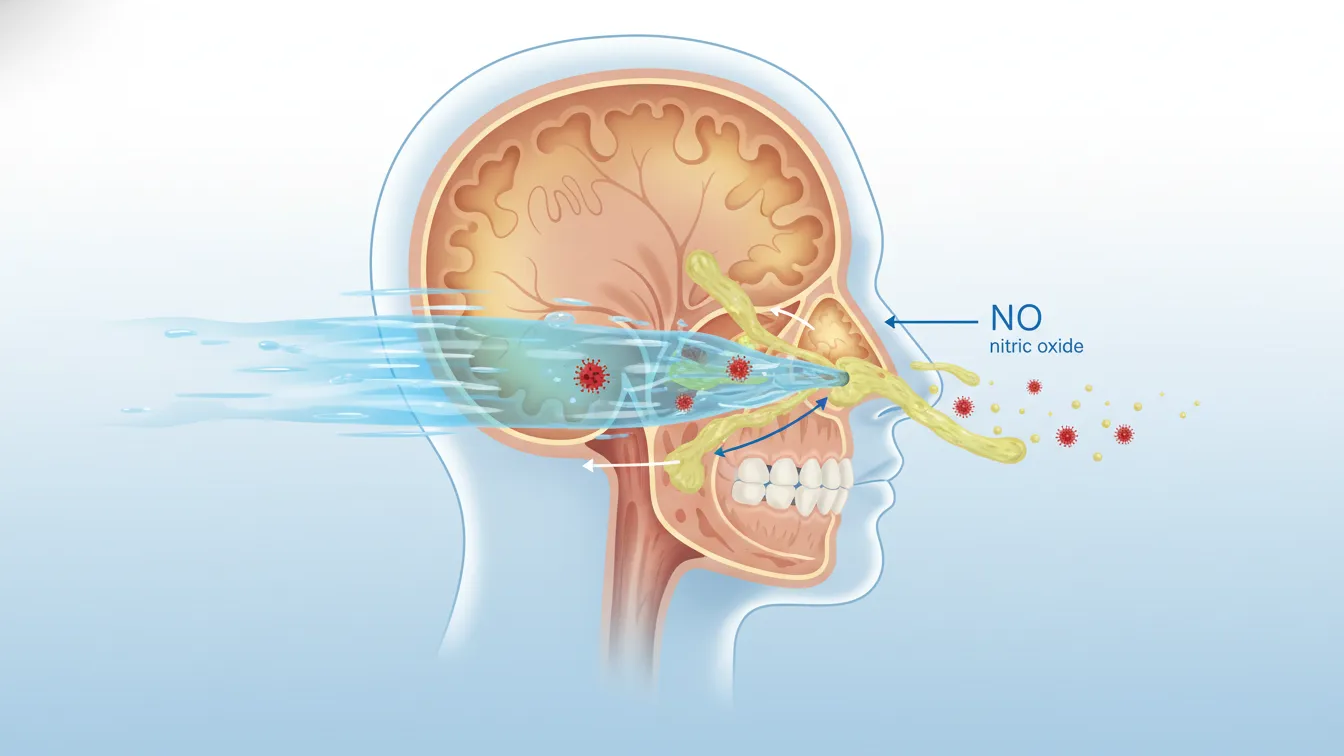
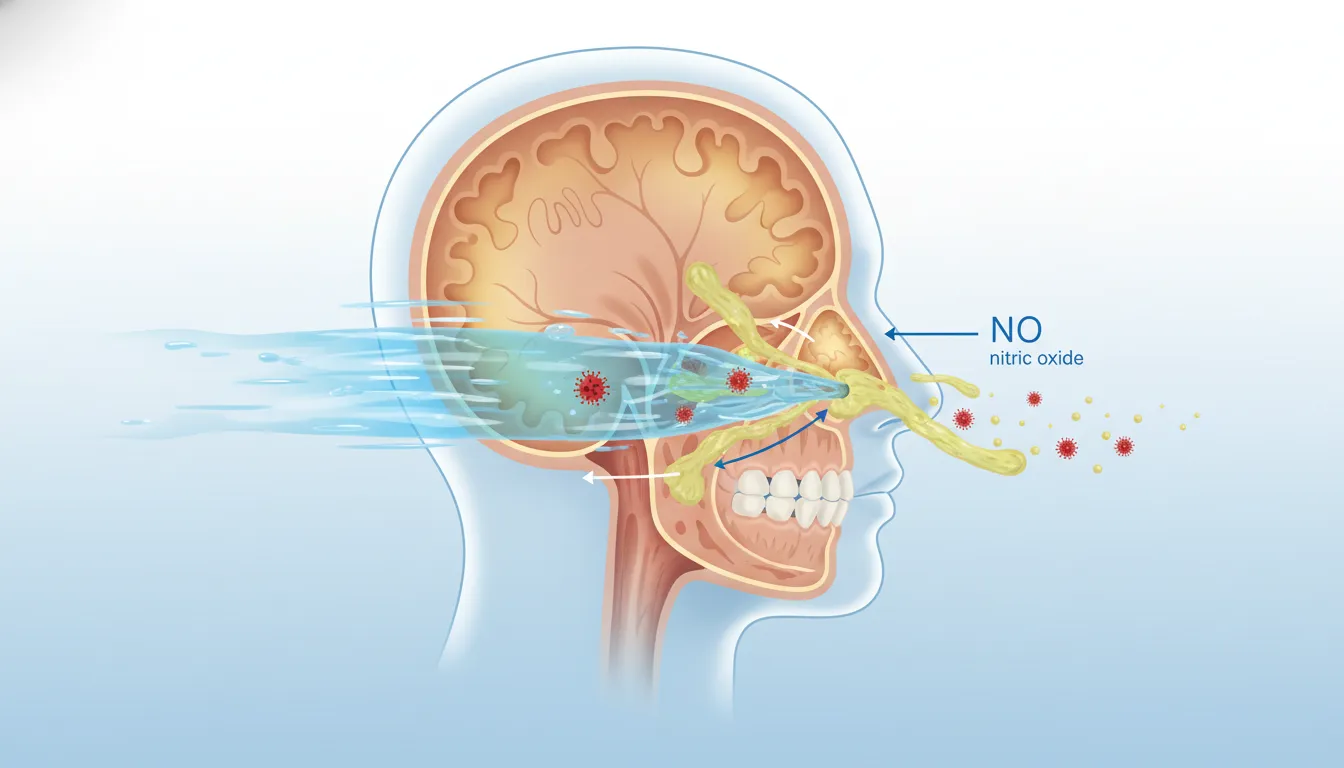
Nasal irrigation is a straightforward idea: put saline into the nose to wash out mucus, reduce swelling, and lower the number of viruses living in the nasal passages. Done correctly, it does more than rinse the nose. It helps the sinuses—the small cavities connected to the nasal passages—drain and activates the local immune defenses that live there.
The sinuses are not just empty spaces. Their lining produces nitric oxide, a potent antibacterial and antiviral compound. Getting saline into the sinuses stimulates that system, helping the body fight infection more effectively while physically reducing viral load by flushing particles out.
Three common irrigation methods — and why nasal lavage stands out
- Neti pot: pours saline through one nostril and out the other. It irrigates the nasal passages, but it rarely forces meaningful amounts into the sinuses.
- Powered/pressure devices: bulb syringes or water-pick style machines push saline through the nose. They can be effective for the nasal passages but still fall short at reliably getting saline into the sinuses.
- Nasal lavage (palm-sniff method): by sniffing saline from the palm of your hand, you create a turbulent mix of air and liquid that more reliably reaches both the nasal passages and the sinuses. That turbulence is the key to opening sinus connections and stimulating sinus immune activity.
How to perform nasal lavage (step-by-step)
- Make a saline solution using clean water and salt (recipe below).
- Pour some saline into the palm of your left hand, then into your right, so each hand has a small pool.
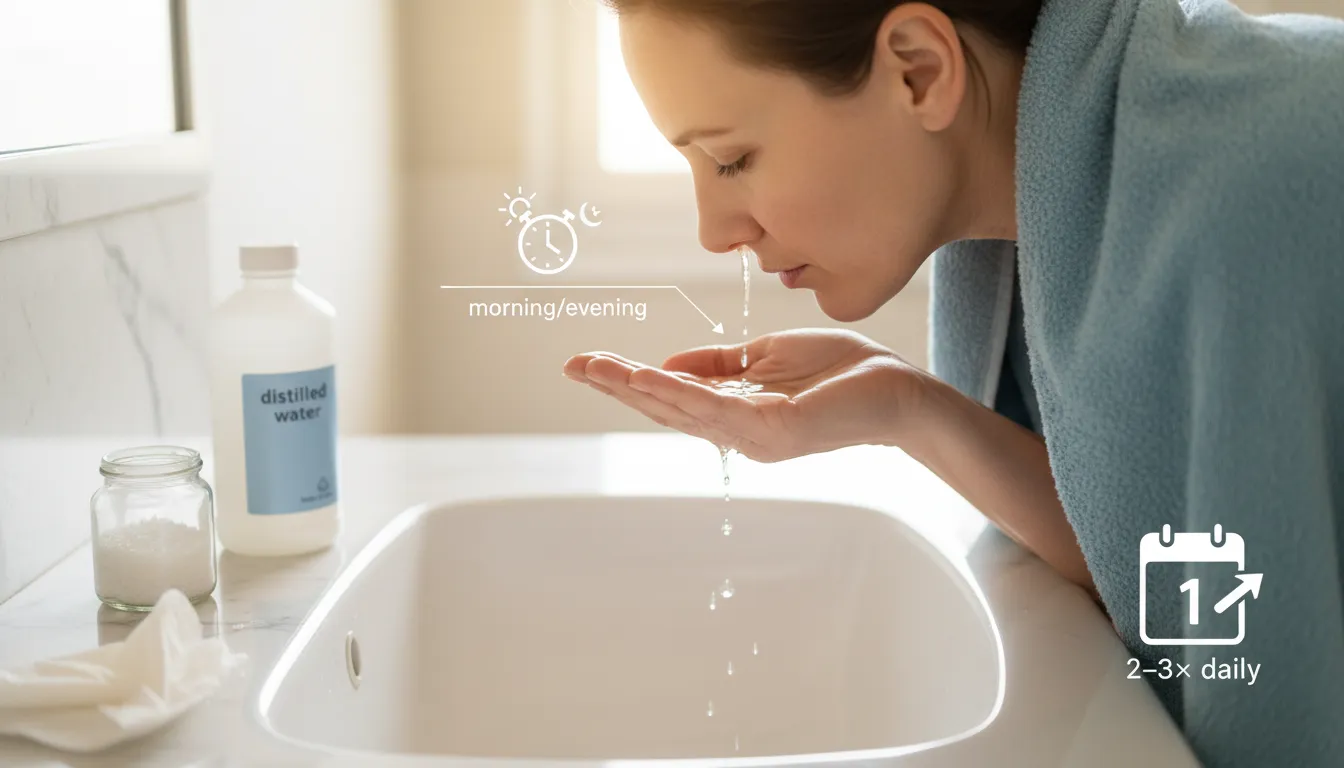
- Lower your nose below your mouth. Place your nose in the center of the palm of one hand and sniff the saline up into your nostrils—air and water together. The goal is turbulence, not a tight seal.
- Repeat with the other handful two more times (three sniffs per session is a good routine).
- Cover your nose with a towel or tissue, stand, and gently blow your nose a couple of times. A few minutes later more saline may leak out as the sinuses drain—that is a good sign.
Tips on technique
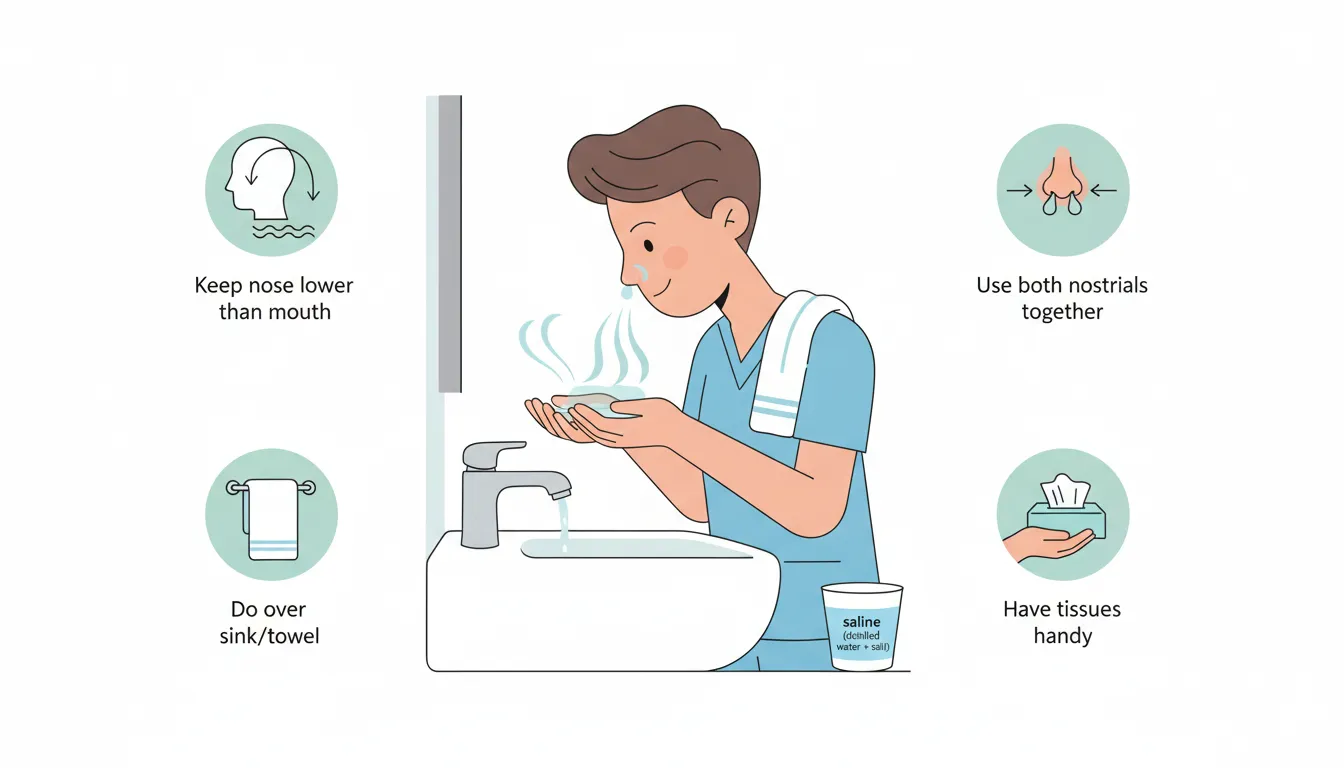
- Do both nostrils together by placing your nose into the center of the hand. Trying to seal one nostril at a time reduces turbulence and is harder to do.
- Keep your nose lower than your mouth so the liquid exits forward through the nose and not down the back of your throat.
- It can be a bit messy. Do it over a sink or a towel and have tissues handy.
Basic saline recipe and safety
The simplest effective ingredients are:
- Clean, lukewarm water (prefer distilled water or water that has been boiled and then cooled).
- Non-iodized sea salt (less processed than table salt and contains trace minerals).
- A small amount of baking soda (sodium bicarbonate) to buffer the solution and make it gentler on the mucosa).
Conservative single-cup recipe
A common starting point:
1 cup (240 mL) lukewarm distilled or previously boiled water
1/4 to 1/2 teaspoon non-iodized sea salt
1/8 teaspoon baking soda
Mix until dissolved.
While this is not our standard office recipe, it is fairly safe for just about everybody and I reserve the actual recipes for our patients. Adjust concentration slightly depending on comfort. The goal is a gentle, saline. There are more robust concentrations and variations that include additional natural additives, but those are individualized; the basic recipe above is safe and effective for most people.
Important safety notes
- Do not use untreated city tap water straight from the faucet. Use distilled water or water that has been boiled and cooled to avoid risk from contaminants.
- Keep the solution at room temperature for easy use and keep it covered to prevent evaporation.
- Avoid adding chemical sterilizers from commercial bottles directly into your solution—many commercial preparations include preservatives you may not want inhaling into the nose.
- If you experience severe pain, persistent bleeding, ear fullness, or fever, stop and consult a healthcare provider.
- Check with a physician before beginning frequent irrigation if you have recent nasal or skull-base surgery, active ear disease, or other complex ENT conditions.
How often to do it and when to start
For acute viral illnesses, start at the very first sign of symptoms. Early and regular irrigation—twice or three times daily—reduces viral numbers in the nose, reduces swelling, and lowers the chance the infection will travel down to the lungs. People who begin irrigation right after exposure (for example, coming home from a crowded place where many are coughing) can reduce the intensity of any developing infection.
There is observational evidence from the COVID period showing dramatic differences in outcomes for people who started nasal irrigation soon after symptoms began. Reported reductions in hospitalization and death were substantial when irrigation was begun early. While irrigation is not a replacement for medical care, it is a simple step that can shift the balance in favor of your immune system.
Other uses and benefits
- Prevention: use after known exposure or during high-risk situations.
- Chronic allergies: regular irrigation helps clear allergens and soothe inflamed mucosa.
- Chronic sinusitis: many people with recurrent or resistant sinus infections find repeated nasal lavage reduces symptoms and sometimes avoids the need for surgery if done faithfully over weeks.
- Winter dryness: regular saline keeps nasal passages hydrated and can reduce bleeding from dry nasal lining.
Closing thoughts
Nasal lavage is a low-risk, low-cost, and highly practical tool to support your nasal and sinus health. When used early and consistently during a viral upper respiratory infection, it reduces viral load, stimulates sinus immune defenses, and often shortens the duration and severity of symptoms. It is easy to learn, takes only a few minutes, and can be incorporated as part of everyday wellness, prevention after exposure, or as an adjunct during chronic nasal conditions.
If you try it, use clean water, the gentle saline recipe above, and start at the first sign of symptoms. If you have specific medical concerns, ask your healthcare provider whether nasal lavage is appropriate for you.
Click Here to Access Your First Trial of StemWave Pain management
Stay connected with news and updates!
Join our mailing list to receive the latest news and updates from our team.
Don't worry, your information will not be shared.
We hate SPAM. We will never sell your information, for any reason.
